01
Textile waste & circularity
Designing practical systems for segregation, documentation, recovery and textile-to-textile recycling across complex manufacturing environments.
Sustainability & circular economy leader
Turning textile waste into transparent, traceable and higher-value circular systems.
kg of textile waste recycled through programmes he managed
national Circular Fashion Partnerships managed
languages: Bangla, English and Russian
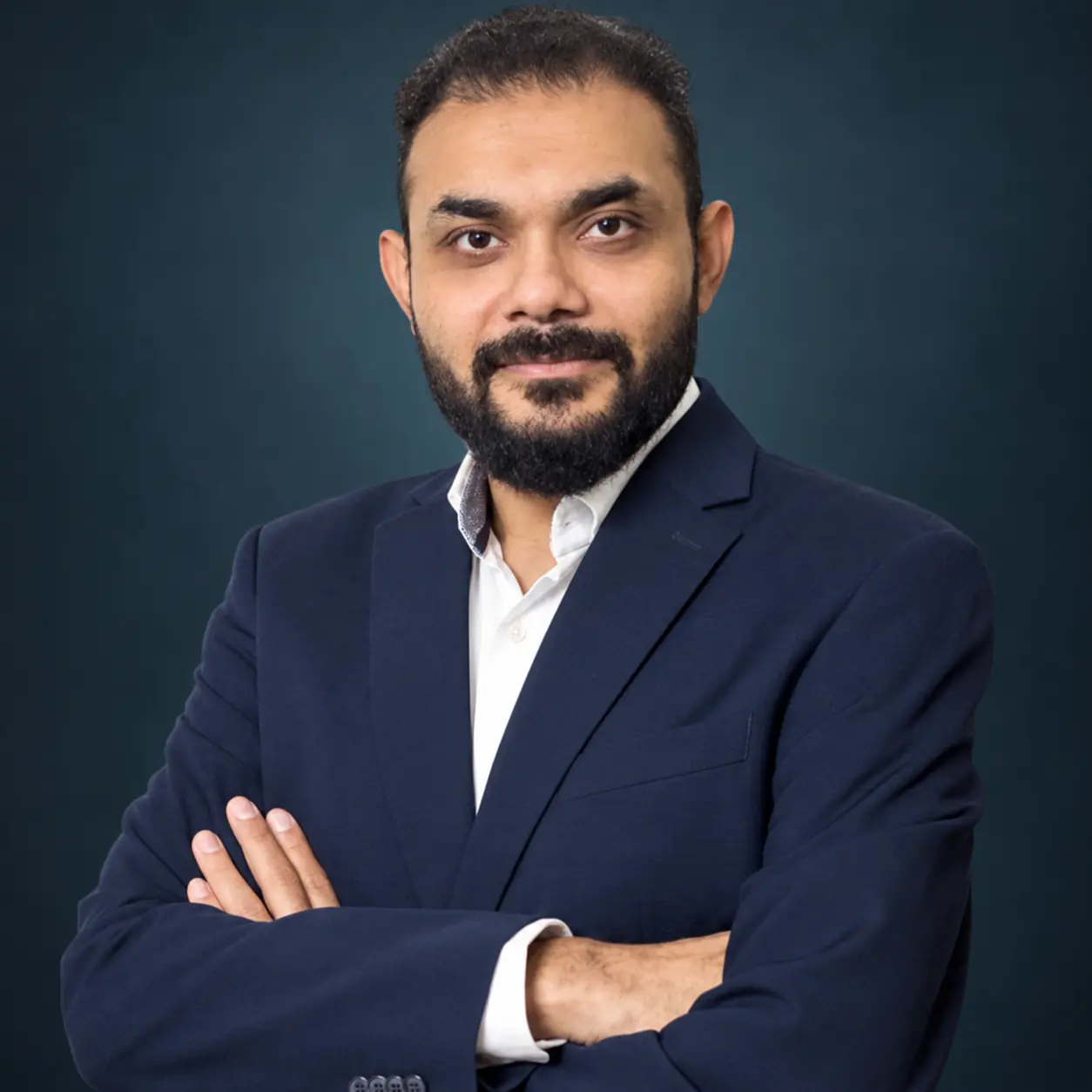
Shamiul brings more than 24 years of experience spanning finance, international communication, textile sourcing, sustainability, traceability and circular economy programmes. His work connects strategy with implementation, from factory-level waste systems to multi-country partnerships.
He has worked with brands, manufacturers, recyclers, industry bodies and development partners to improve material transparency, strengthen technical capacity and move post-industrial textile waste towards higher-value recycling.
Technical depth, programme leadership and industry relationships brought together to make circularity practical.
Designing practical systems for segregation, documentation, recovery and textile-to-textile recycling across complex manufacturing environments.
Building transparent data flows and strengthening adoption of tools that track materials, products and waste through the supply chain.
Leading multi-stakeholder initiatives from scoping and programme design through implementation, partnership management and impact reporting.
Developing curricula, training professionals and supporting factories to embed international sustainability requirements into daily operations.
Explore documented programmes, pilots, assessments and research assignments. Filter the portfolio, then open any project to read its full description and Shamiul’s contribution.
Building the capability of Cambodian local service providers to deliver professional textile waste management advisory services to garment factories.
The Sustainable Textile Industry in Cambodia II assignment strengthens local service providers’ capacity to deliver textile waste management advisory services. It combines formal training, factory-based practice and ongoing coaching so local experts can independently assess waste systems and guide implementation.
Supporting the shift from conventional disposal to transparent, higher-value recycling through factory assessments, traceability and technical capacity building.
The programme advances circular economy practices within Cambodia’s textile industry by strengthening sustainable waste management systems, enhancing material traceability and supporting the transition from conventional disposal to value-driven recycling. It prioritises reducing landfill and incineration by promoting textile-to-textile recycling and improving transparency across the waste value chain.
Led baseline assessments and designed practical waste, tracking and reporting systems to support higher-value textile-to-textile recycling.
The CFP Indonesia initiative strengthened circularity in the textile sector by improving waste management, traceability systems and industry capacity. It supported the diversion of textile waste from landfill and incineration towards high-value textile-to-textile recycling, with an emphasis on data-driven decisions, transparency and collaboration across the value chain.
Supported the development of an integrated environmental assessment framework covering chemicals, energy, water, wastewater and waste management.
The assignment supported the RMG Sustainability Council team in developing and implementing a comprehensive environmental performance assessment framework. The framework addressed chemical management, energy, water, wastewater and waste management within the ready-made garment sector.
Shamiul provided technical expertise on textile-sector waste management and helped ensure that waste performance was appropriately represented within the wider environmental assessment approach.
Strengthened the project terms of reference and revised a practical guidebook for waste handlers, integrating stakeholder feedback and Code of Conduct content.
The assignment covered research and recommendations on the project terms of reference, staffing structure and costs. It also included reviewing and improving the quality of the terms of reference, integrating stakeholder feedback and revising the waste-handler guidebook for clarity and practical use.
Provided local evidence, stakeholder insight and practical recommendations to strengthen the feasibility and design of a new Bangladesh programme.
The scoping mission examined circular economy and sustainable waste management opportunities in Bangladesh, with a focus on textile waste. It brought together local evidence on textile waste, solid waste and e-waste, including legislation, policies, studies, extended producer responsibility initiatives and relevant stakeholders.
Embedded circular economy principles upstream by identifying, recovering and recycling post-industrial textile waste into high-quality inputs for garment production.
The BESTSELLER SWITCH Upstream Circularity Pilot was designed to embed circular economy principles into the upstream stages of BESTSELLER’s supply chain. It focused on identifying, recovering and recycling post-industrial textile waste at source, then transforming it into high-quality raw materials for reuse in garment production.
Working with manufacturing partners, recyclers and other stakeholders, the project established scalable approaches to waste segregation, material recovery and closed-loop recycling. It supported resource efficiency and the transition towards a more circular fashion industry.
Shamiul managed project execution, stakeholder collaboration and capacity building, while providing technical expertise on waste recycling and traceability.
Connected manufacturers, recyclers, brands and policymakers to return post-industrial textile waste to production as higher-value raw material.
The Circular Fashion Partnership Bangladesh was created to foster a circular economy in one of the world’s leading garment manufacturing markets. It focused on recycling post-industrial textile waste and reintroducing it into production as high-value raw material through collaboration among manufacturers, recyclers, brands and policymakers.
The initiative reduced waste, conserved resources and supported lower environmental impact. It also explored the inclusion of informal-sector workers within a more formal waste management ecosystem, creating potential social and economic benefits alongside environmental progress.
Shamiul oversaw project planning, implementation and stakeholder engagement, helping partners work together towards the programme’s circularity goals.
Supported textile manufacturers and sector stakeholders to improve waste practices, resource efficiency and environmental and social performance.
The project promoted sustainable and circular waste management practices in Cambodia’s textile and garment industry. It focused on improving environmental and social standards, strengthening sustainable production methods and increasing resource efficiency across the post-industrial textile waste value chain.
It addressed waste management, labour conditions and environmental impacts while helping local manufacturers transition towards more sustainable operating practices.
Shamiul engaged sector stakeholders and provided technical expertise to improve industry waste management practices.
Mapped waste-management pressure points and key actors, then contributed to the design of a national Circular Fashion Partnership framework.
The project explored opportunities to integrate circular economy principles into Vietnam’s apparel manufacturing industry. It addressed key waste management challenges by engaging stakeholders, mapping pressure points and identifying critical private and public actors.
A major outcome was the design of a Circular Fashion Partnership framework for Vietnam to promote collaboration, sustainability and circularity within the textile sector.
Shamiul facilitated stakeholder engagement, analysed supply-chain challenges and contributed to the partnership design, ensuring alignment with circular economy goals.
Trained stakeholders, validated waste data and translated digital traceability insights into recommendations for more circular waste management.
The assignment profiled post-industrial manufacturing waste across H&M’s supply chain, analysing waste types, volumes and material composition. A digital traceability tool supported the collection, tracking and management of waste data, creating more accurate and transparent reporting.
The resulting insights were intended to improve waste management, promote circularity and reduce environmental impact.
Shamiul trained stakeholders to use the digital traceability tool, conducted data analysis and validation, and developed recommendations to improve waste management and circularity.
Researched regulation, informal-sector practices and recycling barriers, then developed recommendations for an enabling post-industrial waste framework.
The assignment developed recommendations for a regulatory framework that enables the recycling of post-industrial textile waste, commonly called “Jhut”, in Bangladesh’s ready-made garment industry.
Built a collaborative framework for recycling post-industrial textile waste, reducing reliance on virgin materials and supporting green economic growth.
The Circular Fashion Partnership Cambodia aimed to establish a robust framework for circularity within the country’s textile and apparel industry. Building on Circular Fashion Partnership experience in other regions, it focused on recycling post-industrial textile waste into new products, reducing reliance on virgin materials and minimising waste sent to landfill.
Through collaboration with garment manufacturers, recycling innovators, brands and policymakers, the partnership sought to create a scalable system for textile waste management. It aligned with Cambodia’s sustainability priorities by promoting resource efficiency, reducing environmental impact and supporting green economic growth.
Implemented source-to-finished-product tracing for U.S. Cotton Trust Protocol cotton, giving Next verifiable origin and journey data.
The project implemented a fibre-forward tracing system for U.S. Cotton Trust Protocol cotton across the full supply chain, from raw material sourcing to finished products delivered to Next. It aimed to improve transparency, accountability and supply-chain efficiency while giving stakeholders verifiable data on cotton origin and movement.
Using digital traceability technology and established industry practices, the work supported sustainability compliance and alignment with Next’s corporate responsibility goals.
Created a verifiable framework to document man-made cellulosic fibres from origin to finished product and support responsible sourcing.
The project established a fibre-forward traceability system to monitor and document the journey of man-made cellulosic fibres used by BESTSELLER, from origin to finished products. It was designed to strengthen supply-chain transparency, demonstrate compliance with sustainability standards and support responsible sourcing.
Digital tracking technologies and stakeholder engagement created a more reliable and verifiable traceability framework aligned with BESTSELLER’s sustainability goals and growing consumer demand for accountability.
Monitored man-made cellulosic fibres and recycled polyester from source to finished goods, strengthening transparency and sourcing accountability.
The project developed and implemented a fibre-forward traceability system for man-made cellulosic fibres and recycled polyester used by H&M. It tracked and verified materials from origin through the production of finished goods.
The initiative strengthened transparency and accountability, supported responsible sourcing, and used advanced traceability technology and collaborative partnerships to help meet environmental and social standards and H&M’s sustainability objectives.
Mapped and analysed waste streams across H&M’s global supply chain to expose inefficiencies and support circular interventions.
The H&M Global Waste Mapping Project identified, quantified and analysed waste generated across H&M’s global supply chain. It developed a fuller understanding of waste streams across supply-chain stages, from material sourcing through finished-product distribution.
By mapping waste across markets, the initiative sought to reveal inefficiencies, promote more sustainable practices and support H&M’s transition towards a circular economy.
Mapped extended textile and garment supply chains back to raw material countries of origin in support of Marks & Spencer’s Plan A.
This product-backward traceability project supported Marks & Spencer’s Plan A objectives for sustainability and transparency. It mapped the extended supply chain for textile and garment products and aimed to trace as many products as possible back to the raw material’s country of origin.
By identifying fibre origins and analysing supply-chain touchpoints, the project strengthened sustainable sourcing, responded to expectations for ethical production and set a benchmark for traceability and accountability in the kidswear segment.
Used the StringTogether platform to map textile products to origin, verify raw-material sources and test a model for wider traceability.
The Carrefour Textiles Traceability Pilot in Bangladesh used Historic Futures’ StringTogether platform to map textile products back to their origin. It improved supply-chain visibility, verified raw-material sources and supported Carrefour’s commitment to ethical and sustainable sourcing.
The pilot also produced practical insight for scaling traceability across Carrefour’s wider global operations.
Traced raw materials in Levi’s products to verify ethical and sustainable sourcing and test a scalable traceability system.
This pilot strengthened Levi’s supply-chain transparency by tracing raw materials used in selected products. It focused on verifying ethical and sustainable sourcing practices and testing traceability systems that could be scaled for broader implementation.
Traced cotton used in H&M products to its country of origin, producing actionable sourcing insight and supporting responsible production.
The H&M Cotton Traceability Project traced cotton used in products back to its country of origin. It strengthened supply-chain transparency, produced actionable insight into fibre sourcing and supported H&M’s sustainability and responsible-production goals.
Traced organic cotton and recycled synthetic materials to verify material origins and strengthen sourcing accountability.
This initiative traced adidas organic cotton and recycled synthetic materials across the supply chain. It verified material origins, strengthened transparency and accountability, and supported alignment with adidas sustainability objectives.
Mapped the origins of raw materials used in BESTSELLER products and established a foundation for broader traceability implementation.
The BESTSELLER traceability pilot mapped the origins of raw materials used in selected products. It increased transparency, supported sustainable sourcing standards and created a foundation for wider implementation of product and material traceability.
Explored tracing product components back to origin to test technologies and frameworks for accountability and future scale.
This first Levi’s pilot explored how product components could be traced back to their origins. It tested traceability technologies and frameworks for supply-chain accountability and assessed their potential for future scaling.
Mapped organic materials through the supply chain to support certification compliance and transparency from sourcing to production.
The Decathlon Organic Product Traceability Project mapped the supply chain for organic materials used in selected products. It supported compliance with sustainability certifications and promoted transparency from sourcing through production.
Traced material origins for Tu Clothing to support ethical sourcing policies and improve supply-chain accountability.
The project traced the origins of materials used in Sainsbury’s Tu Clothing products. It supported the company’s ethical sourcing policies and sustainability objectives by increasing transparency and accountability across the supply chain.
Traced cotton in Tesco products back to its country of origin to strengthen transparency, ethical sourcing and accountability.
The Tesco Cotton Country of Origin Project traced cotton used in selected products back to its country of origin. It strengthened supply-chain transparency and supported Tesco’s ethical sourcing, sustainability and accountability goals.
No projects match these filters. Try another keyword, region, period or focus area.
From finance and translation in Moscow to textile sourcing, digital traceability, regional sustainability programmes and international circular business growth.
Showing all 18 roles
Leading international business growth for traceability and circular textile-waste solutions.
Delivering guest lectures at the Institute of Business Administration, University of Dhaka.
Providing national expertise on circular economy and sustainable textile-waste management.
Established and leads the sustainable materials and circularity division, directing client projects and industry capacity development.
Connected government, industry, brands and international partners while supporting SWITCH2CE and Circular Fashion Partnership programmes.
Represented GFA across Asia, managed National Circular Fashion Partnerships and coordinated UNIDO's SWITCH2CE Upstream Circularity project in Bangladesh.
Set sustainability targets, designed performance tracking and reporting systems, supported GRI reporting and strengthened sustainable material sourcing.
Led country operations, business development and traceability projects, onboarding and training more than 150 manufacturers.
Co-created sustainable denim and cellulose strategies, developed material policies and verification requirements, and received the Employee of the Year award.
Established the company's presence across Southeast Asia, supported global projects and built relationships with brands, manufacturers, traders and public bodies.
Led material-traceability projects across production regions, strengthened product integrity and implemented product-integrity and animal-welfare policies.
Supported growth in Bangladesh woven-material sourcing from 120 million to more than 200 million yards annually through market analysis and supplier development.
Moscow, Russian Federation
Primeasia University
Financial Academy, Russian Federation
Contact Shamiul directly by email, phone or WhatsApp, or visit his LinkedIn profile for professional updates and connections.